Plant Spacing Calculator
Instantly calculate the exact number of plants you need for any garden area. Save money and time by planning the perfect spacing for your raised beds, flower borders, and vegetable rows.
Was this calculator helpful?
How to Calculate Plant Spacing
Measure the Area
Find the length and width of your garden bed. If it's a circle, measure straight across the middle (diameter).
Check Plant Tags
Look at the seed packet or nursery tag for the recommended spacing (e.g., 12 inches center-to-center).
Get Your Results
Enter the numbers above. We'll tell you exactly how many individual plants or multi-packs to buy at the nursery.
Area ÷ (Spacing × Spacing) = Total Plants
To find how many plants fit in an area, we convert your spacing into square feet, and divide the total garden area by that number. For triangular spacing, plants are staggered in a hexagonal pattern, which allows you to fit roughly 15% more plants into the exact same area!
Everything You Need to Know About Plant Spacing
Why Does Proper Spacing Matter?
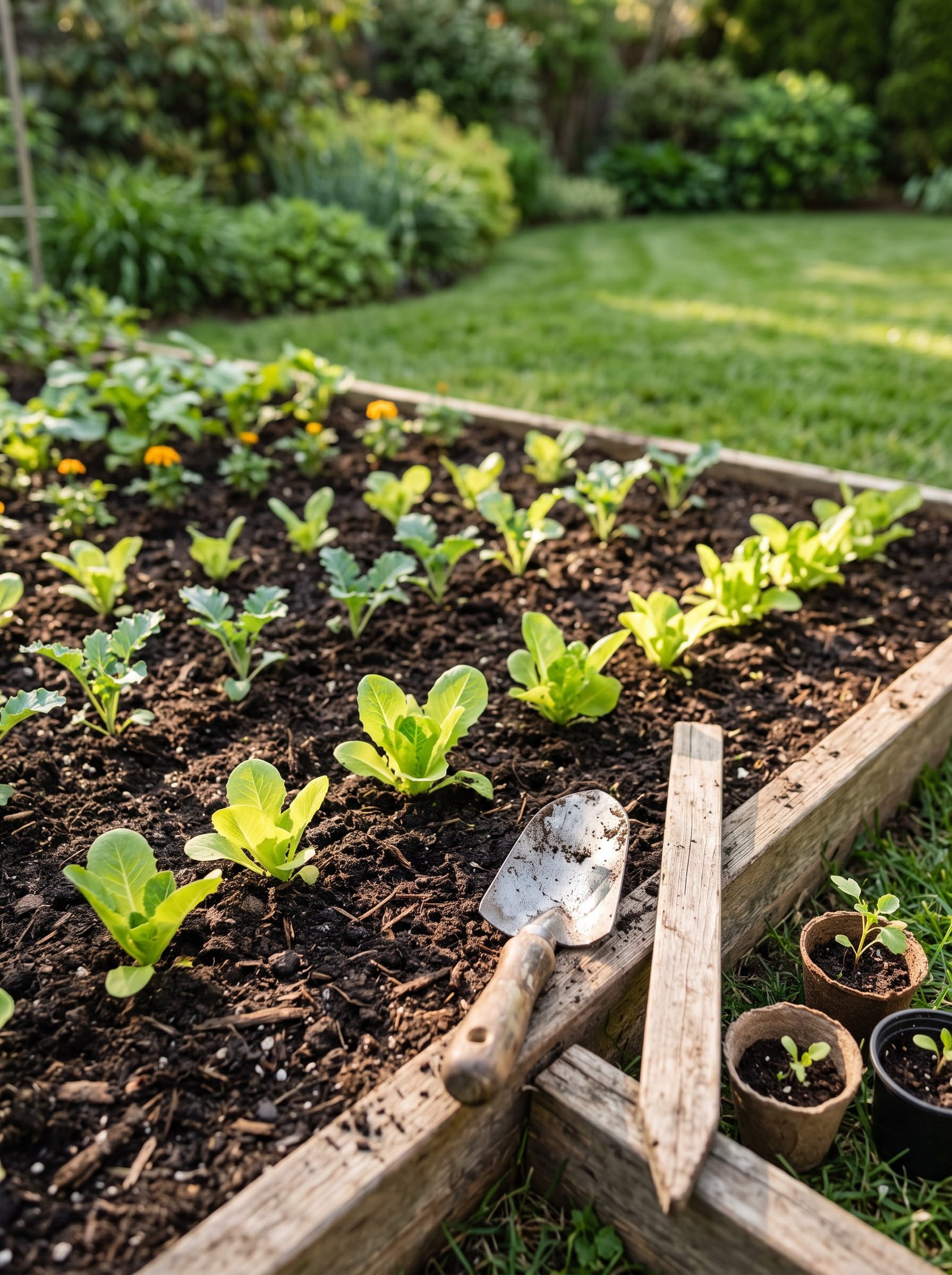
Giving your plants the correct amount of room is crucial for garden health. Placing them too close restricts airflow, leading to fungal diseases and stunted growth as root systems fight for nutrients. Planting too far apart leaves bare soil, encouraging weed growth and moisture evaporation.
Square vs. Triangular Spacing
Square (Grid) Spacing lines plants up in perfect horizontal and vertical rows. This is standard for most farming and row gardens. Triangular Spacing staggers the rows so plants form triangles with each other. This mimics natural growth, creates a fuller canopy to block weeds, and maximizes your yield in a small raised bed.
Buying Flats vs. Singles
Nurseries typically sell small seedlings in 4-packs, 6-packs, or flats (trays) holding 18 to 36 plants. Using our advanced options, you can see exactly how many packs to grab. It is often much cheaper to buy a full flat rather than paying per individual pot.
Accounting for Plant Loss
Not every seed germinates, and not every transplant survives shock, pests, or weather. It is standard practice to buy 5-10% more plants than your area strictly requires so you can replace any casualties early in the season.
Frequently Asked Questions
Center-to-center means you measure from the main stem of one plant to the main stem of the plant next to it, not from the edges of their leaves.
Most standard creeping groundcovers are spaced anywhere from 6 to 12 inches apart. Closer spacing (6 inches) will fill in and cover bare soil much faster, usually within one season.
Because triangular (or staggered) planting eliminates the empty square corners found in grid planting, allowing plants to nestle closer together diagonally. It fits roughly 15% more plants per square foot.
This calculator assumes equidistant spacing (same distance between plants in all directions) for maximizing bed space. If you are doing distinct rows with wide walking paths between them, calculate the area of just your planting rows.
What Gardeners Say
See how others are using our spacing calculator for their landscape projects.
Super quick and easy. Confirmed exactly how many impatiens I needed for my front border so much time saved at the nursery!
I love using this for my client's gardens. The multiple areas tab is a fantastic feature when calculating complex curvy beds.
The triangular vs square spacing toggle is genius. The cost estimation calculation by 6-packs was a fun extra touch.
Incredibly accurate! I mapped out my entire vegetable garden using this and had exactly the right amount of seedlings.
Perfect for planning my raised beds. The calculations were spot on and I didn't overbuy at the garden center!
Very handy tool. I used it to figure out how many strawberry bare roots to order for a custom tiered planter.