Grass Seed Calculator
Instantly calculate the exact amount of grass seed you need in pounds and bags. Save money and time by buying the perfect amount for your new lawn or overseeding project.
Was this calculator helpful?
How to Calculate Grass Seed
Measure the Area
Find the length and width of your lawn area. If it's irregular, break it into smaller sections and use our "Multiple Areas" tab.
Choose Seed & Method
Select your grass type and whether you are planting a brand new lawn from dirt or just overseeding an existing lawn.
Get Your Results
Enter the numbers above. We'll tell you exactly how many pounds of seed and bags to buy to guarantee a lush yard.
(Sq Ft Area ÷ 1,000) × Seed Rate = Total Pounds
To find pounds manually, you first find your square footage (Length × Width in feet). Since grass seed bags show coverage per 1,000 sq ft, divide your area by 1,000, then multiply by the recommended pounds needed for your specific grass type.
Everything You Need to Know About Buying Grass Seed
Why Do Seeding Rates Differ?
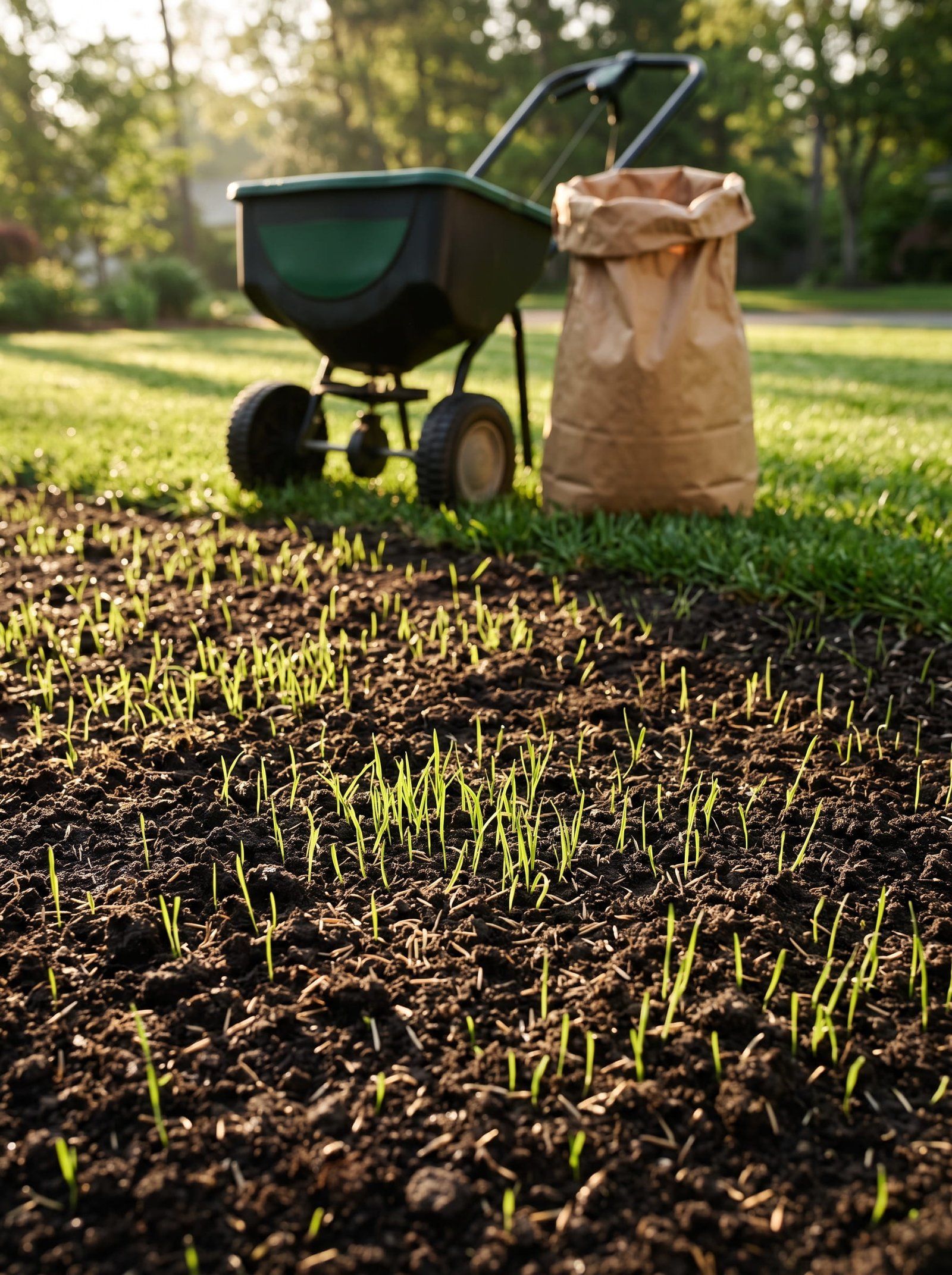
The amount of seed you need depends heavily on the grass species. For example, Kentucky Bluegrass seeds are extremely tiny, meaning you get millions of seeds per pound, requiring a lower seeding rate. Tall Fescue seeds are much larger, requiring up to 8 lbs per 1,000 square feet.
New Lawn vs. Overseeding
When starting a New Lawn on bare dirt, you need a high concentration of seeds to establish a dense turf canopy quickly. When Overseeding an existing lawn to thicken it up, you typically only need half the amount of seed.
Understanding Bag Sizes
Grass seed is sold by weight, not volume. Standard bag sizes are 3 lbs, 7 lbs, 20 lbs, and 50 lbs. Always check the label to ensure a high percentage of pure seed (above 85%) and low weed seed content (0.00% is ideal) to get the most for your money.
Factoring in Waste
We recommend buying about 5% more seed than the strict mathematical area calls for. This accounts for seeds that may not germinate, get eaten by birds, wash away in the rain, or uneven spreading via your broadcast spreader.
Frequently Asked Questions
It depends on the grass type. Tall Fescue requires about 6-8 lbs per 1,000 sq ft for a new lawn, while Bermuda requires only 2-3 lbs. Use our calculator above for an exact recommendation based on your dimensions.
Yes! Seeding too heavily causes young grass seedlings to compete for water, nutrients, and space. This leads to weak, spindly grass that is highly susceptible to disease and die-off.
For cool-season grasses (Fescue, Bluegrass), early fall is best, followed by early spring. For warm-season grasses (Bermuda, Zoysia), late spring to early summer is ideal when soil temperatures reach 65-70°F.
You shouldn't bury it deep, but lightly raking the seed so it makes good soil contact is crucial. You can add a very thin layer (1/4 inch) of peat moss or fine compost to help retain moisture during germination.
What Users Say
See how others are using our grass seed calculator for their lawn projects.
Super quick and easy. Confirmed exactly how many bags of Fescue I needed for overseeding this fall—saved me a trip back to the store!
I love using this for my client's yards. The multiple areas tab is a fantastic feature when calculating complex lawn layouts.
Nice design. The cost estimation calculation was a fun extra touch I wasn't expecting but really appreciated.
This was incredibly accurate! It calculated my pounds exactly right for my new Kentucky Bluegrass lawn.
Takes the guesswork out of buying seed. The breakdown by bag size is incredibly helpful when standing in the hardware store.
Very easy to use on my phone. Helped me figure out the seed rate for Zoysia in just a few clicks. Highly recommend!
More Lawn & Garden Calculators
Ready to start your landscaping project?
Stop guessing and start saving time.
Explore more calculators