Compost Calculator
Instantly calculate the exact amount of compost you need in cubic yards and bags. Save money and time by buying the perfect amount to amend your raised beds and gardens.
Was this calculator helpful?
How to Calculate Compost
Measure the Area
Find the length and width of your garden bed. If it's a circle, measure straight across the middle (diameter).
Choose the Depth
Decide how thick you want the compost. 2-3 inches is the sweet spot for amending most flower beds and gardens.
Get Your Results
Enter the numbers above. We'll tell you exactly how many bags or cubic yards to buy, saving you multiple trips.
((Sq Ft Area × Beds) × Depth in inches) ÷ 324 = Cubic Yards
To find cubic yards manually, you first find your square footage (Length × Width in feet). Since a cubic yard is a 3D measurement (27 cubic feet), you multiply your square footage by your depth in feet (inches divided by 12), and then divide by 27. The shortcut is dividing by 324!
Everything You Need to Know About Buying Compost
Why Should You Add Fresh Compost?
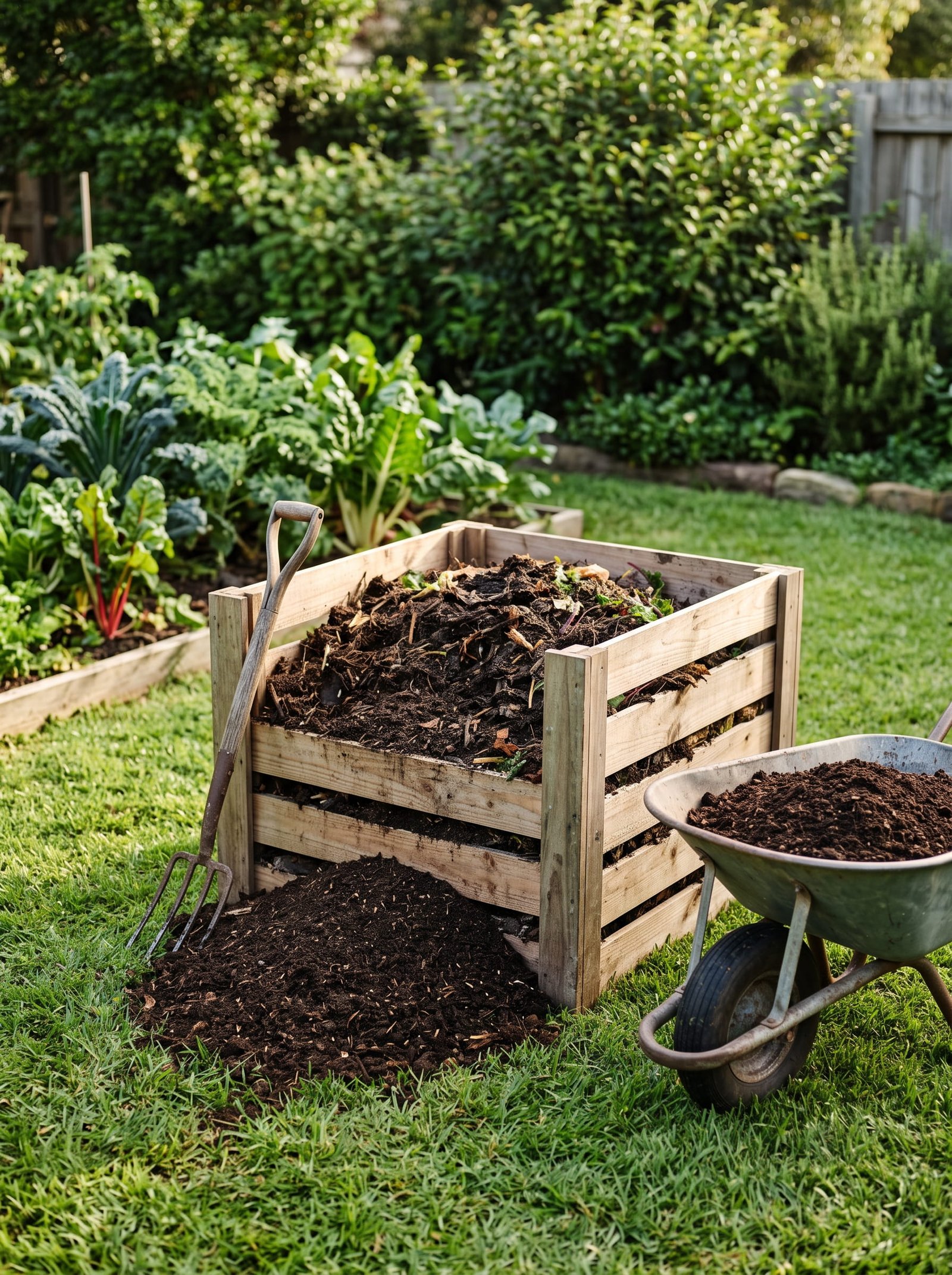
Adding fresh compost improves nutrient density, increases organic matter, and optimizes moisture retention in your garden. Over time, plants deplete organic matter, and soil can become compacted. Adding a fresh layer of compost revitalizes the ground, leading to healthier root systems and larger blooms.
How to Measure Your Garden Bed
For rectangular beds, measure the length and width in feet. For circular beds, measure straight across the middle (the diameter). For irregular shapes, break the bed into smaller sections and use our calculator's "Multiple Areas" tab. If you have several identical beds, just use the "Number of Beds" multiplier.
Bags vs. Bulk (Cubic Yards)
It takes 27 standard (1 cu. ft.) or 13.5 (2 cu. ft.) bags to equal one cubic yard. If you need more than 3 cubic yards, scheduling a bulk delivery is almost always cheaper. Bags are best for small touch-ups or tight backyard spaces.
Compost Weight Considerations
A cubic yard of compost typically weighs between 1,000 and 1,200 lbs depending on moisture content. Keep this in mind if you are hauling it yourself in a pickup truck, as exceeding your vehicle's payload capacity can be dangerous.
Frequently Asked Questions
There are 27 bags (1 cubic foot bags) or 13.5 bags (2 cubic foot bags) in one cubic yard. If you are buying large 3 cubic foot bags, it takes 9 bags to equal one yard.
At a standard amendment depth of 3 inches, one cubic yard of compost covers exactly 108 square feet.
For amending most flower beds and vegetable gardens, a depth of 2 to 3 inches is ideal before tilling or mixing it in. If you are just applying a top-dressing to an existing lawn, 1/4 to 1/2 inch is sufficient.
Bulk compost (sold by the cubic yard) is almost always cheaper per unit of volume than bagged compost. However, you must factor in delivery fees. Usually, if you need more than 3 cubic yards, bulk delivery is the most cost-effective route.
Gardens naturally settle and deplete nutrients as plants grow. It is typically recommended to top-dress your beds with an inch or two of fresh compost annually, usually in early spring or late fall.
What Users Say
See how others are using our compost calculator for their landscaping projects.
Super quick and easy. Confirmed exactly how many bags I needed to amend my raised beds so much time saved at the hardware store!
I love using this for my client's gardens. The multiple areas and beds tab is a fantastic feature when calculating complex yard layouts.
Nice design. The cost estimation and weight calculation was a fun extra touch I wasn't expecting but really appreciated to make sure my truck could handle it.
Perfect tool for planning out my new raised beds. The compost calculation was spot on and saved me from buying too many bags.
I really appreciated the cost estimation feature. It helped me decide between buying bags locally or getting bulk delivery.
Simple, accurate, and completely free. The visualizer is a nice touch to confirm I've set the right depth for my garden.
More Lawn & Garden Calculators
Ready to start your landscaping project?
Stop guessing and start saving time.
Explore more calculators